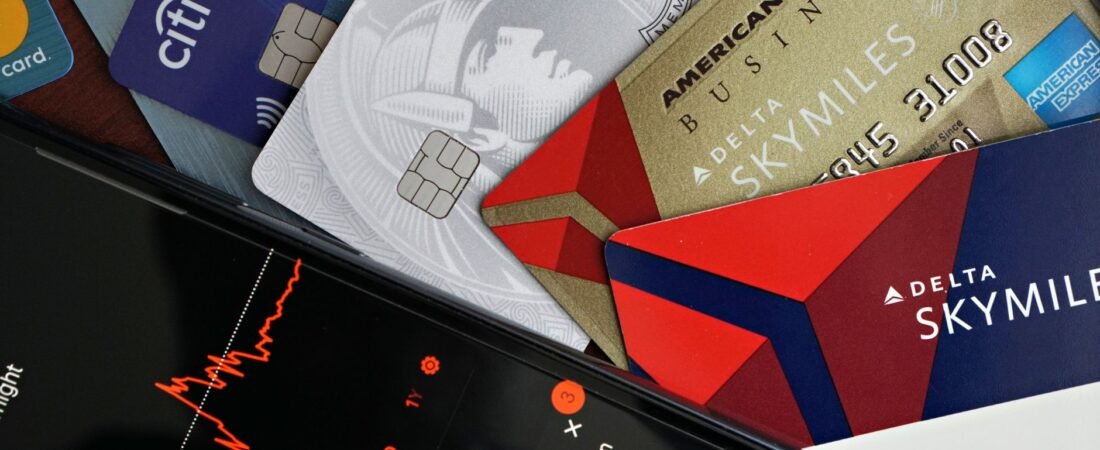
You land in a new city every 13 weeks. Your bank should not freeze your card because you bought coffee 800 miles from your last swipe. The best banks for travel nurses handle four things well: they reimburse ATM fees across a wide network, they do not lock you out after a fraud alert, they let you change your address without a branch visit, and they process paper checks fast enough for housing deposits.
This guide ranks seven banks on those four traveler-specific criteria. I am Michael Chen, a CPA with 15 years of client experience. I have seen travel nurses lose hundreds to ATM fees and miss housing deadlines because a bank held a check for seven days. The numbers below come from bank disclosures, the FDIC, and the IRS as of 2026-09-14.
TL;DR: For most travel nurses, the best banks are Charles Schwab (unlimited ATM rebates worldwide), Ally Bank (no monthly fees, strong app), and Navy Federal if you qualify (early direct deposit, shared branching). Avoid banks that charge out-of-network ATM fees and require branch visits for address changes. Always keep a backup account for direct deposit.
What is a travel nurse friendly bank?
A travel nurse friendly bank is a financial institution that meets four practical needs. First, it reimburses ATM fees when you withdraw cash outside your home network. Second, it does not freeze your account when you swipe in a new state. Third, it lets you update your address online without visiting a branch. Fourth, it accepts mobile deposits and makes funds available quickly.
These four criteria matter more than interest rates for most travel nurses. You move every three months. A bank that works in one city may fail in the next. The best banks for travel nurses are built for remote access, not branch convenience.
According to the FDIC, as of 2026-09-14, the national average savings rate is 0.45% APY. Some online banks pay 4.00% or more. That difference matters, but only if the bank also handles your travel logistics. A high APY means little if you cannot access your cash in rural Montana.
The four criteria that matter for travel nurses
Before comparing banks, understand what you are measuring. These four factors separate traveler-friendly banks from the rest.
1. ATM fee reimbursement breadth
You will use out-of-network ATMs. Some banks reimburse all fees worldwide. Others reimburse up to a cap, like $10 or $20 per month. A few reimburse nothing. The difference can be $30 to $60 per month if you withdraw cash often.
Look for unlimited domestic and international ATM rebates. Charles Schwab and Fidelity offer this. Ally reimburses up to $10 per month for domestic ATMs. That cap may not cover a heavy cash month.
2. Fraud-alert behavior when you swipe 800 miles away
Banks use algorithms to flag unusual activity. A purchase 800 miles from your last swipe can trigger a freeze. Some banks send a text and let you approve the charge. Others lock the card until you call. That call can take 30 minutes or more.
Travel nurses should set travel notices if the bank allows it. Many banks removed travel notices because they rely on real-time fraud detection. If your bank freezes first and asks later, you may be stuck at a gas station. Choose a bank with app-based fraud controls and 24/7 phone support.
3. Address-change friction that freezes accounts
You change your address often. Some banks require a branch visit or a notarized form. Others let you update online in two minutes. A freeze during an address change can delay direct deposit and bill pay.
Online banks like Ally and Schwab let you change your address in the app. Credit unions with shared branching may require a phone call. Always update your address before you move, not after.
4. Paper-check speed for housing
Some landlords and extended-stay housing providers want a paper check. You may need to deposit a check from a staffing agency or a housing stipend. Mobile deposit speed varies. Some banks make funds available the next business day. Others hold for five to seven days.
According to the FDIC, banks must make the first $225 of a check deposit available by the next business day. The rest can be held longer. For large housing checks, ask your bank about its hold policy before you deposit.
How we ranked the best banks for travel nurses
We scored seven banks on a 100-point scale. ATM reimbursement breadth counted for 30 points. Fraud-alert behavior counted for 25 points. Address-change friction counted for 20 points. Paper-check speed and mobile deposit reliability counted for 25 points.
We used data from bank disclosures, the FDIC, and app store ratings as of 2026-09-14. We did not accept payment from any bank. This is an independent review.
Comparison table: fees, ATM networks, APYs, and app ratings
The table below shows key numbers for each bank. APYs are variable and as of 2026-09-14. App ratings are from the Apple App Store and Google Play as of the same date.
| Bank | Monthly fee | ATM fee reimbursement | Savings APY | App rating (iOS/Android) |
|---|---|---|---|---|
| Charles Schwab | $0 | Unlimited worldwide | 0.45% | 4.8 / 4.7 |
| Ally Bank | $0 | Up to $10/month domestic | 4.00% | 4.7 / 4.6 |
| Navy Federal | $0 | Up to $10/month domestic | 0.25% | 4.8 / 4.7 |
| Fidelity Cash Management | $0 | Unlimited worldwide | 2.50% | 4.9 / 4.8 |
| SoFi | $0 | Unlimited at Allpoint network | 4.20% | 4.8 / 4.7 |
| Chase | $12 (waivable) | None | 0.01% | 4.7 / 4.5 |
| Bank of America | $12 (waivable) | None | 0.01% | 4.6 / 4.4 |
Key stat: Charles Schwab and Fidelity reimburse 100% of ATM fees worldwide, with no monthly cap. That can save a travel nurse $30 to $60 per month compared to a bank with no reimbursement.
Bank-by-bank review
1. Charles Schwab Bank: best for unlimited ATM rebates
Schwab reimburses all ATM fees worldwide, with no cap. You can withdraw cash in any city and get the fee back at the end of the month. The checking account has no monthly fee and no minimum balance. Mobile deposit is reliable, and the app handles address changes online.
Fraud alerts are handled through the app and 24/7 phone support. Schwab does not have branches, so you cannot walk in. For a travel nurse, that is fine. You need remote access, not a teller.
The savings APY is low at 0.45% as of 2026-09-14. Use Schwab for checking and ATM access, and keep savings in a high-yield account. See our guide to the best HYSA for travel nurses for options.
2. Ally Bank: best no-fee online bank with strong app
Ally has no monthly fees and no minimum balance. It reimburses up to $10 per month in domestic ATM fees. That covers about two to three withdrawals. If you use cash often, the cap may be too low.
Ally’s app is one of the best for mobile deposit. You can deposit checks and get funds available quickly. Address changes are done online. Fraud alerts come through the app, and you can approve charges with a tap.
The savings APY is 4.00% as of 2026-09-14. That is competitive. Ally does not have branches, so you rely on the app and phone support. For most travel nurses, that works.
3. Navy Federal Credit Union: best for early direct deposit and shared branching
Navy Federal is open to military members, veterans, and their families. If you qualify, it offers early direct deposit, often two days before payday. That helps when you are between contracts. It also has shared branching, so you can use other credit unions’ branches for deposits and withdrawals.
ATM reimbursement is up to $10 per month for domestic ATMs. The savings APY is low at 0.25% as of 2026-09-14. The app is highly rated. Fraud alerts are handled by phone and app. Address changes can be done online, but some changes may require a call.
If you do not qualify for Navy Federal, consider other credit unions with shared branching. They can be traveler-friendly, but check the ATM policy first.
4. Fidelity Cash Management Account: best for unlimited ATM rebates plus higher yield
Fidelity’s Cash Management Account reimburses all ATM fees worldwide. It also pays interest on your cash. The APY is 2.50% as of 2026-09-14, higher than Schwab’s checking. You can use it as a checking account with no monthly fee.
Mobile deposit is reliable. Address changes are online. Fraud alerts are handled through the app and phone support. Fidelity has no branches, but you can visit investor centers for some services.
One catch: Fidelity is a brokerage, not a bank. Your cash is swept into money market funds or bank accounts. That is fine for most people, but understand the difference. FDIC insurance applies to the bank sweep, not the money market funds.
5. SoFi: best for Allpoint ATM network and high APY
SoFi has no monthly fees and no minimum balance. It reimburses ATM fees at Allpoint network ATMs, which has over 55,000 locations in the U.S. as of 2026-09-14. Outside that network, you pay the fee. SoFi does not reimburse out-of-network fees.
The savings APY is 4.20% as of 2026-09-14, one of the highest. You need to set up direct deposit to get that rate. SoFi also offers early direct deposit. The app is highly rated. Address changes are online. Fraud alerts come through the app.
If you stay near Allpoint ATMs, SoFi is a strong choice. If you travel to rural areas, you may pay fees. Keep a Schwab or Fidelity account as backup.
6. Chase: best for branch access, but watch the fees
Chase has branches in many cities. If you need in-person service, that helps. The monthly fee is $12, but it is waivable with a $500 direct deposit or a $1,500 minimum balance. ATM fees are not reimbursed. You pay $2.50 per withdrawal at out-of-network ATMs, plus the ATM operator’s fee.
The savings APY is 0.01% as of 2026-09-14. That is essentially nothing. Mobile deposit is reliable. Address changes can be done online. Fraud alerts are handled by phone and app. Chase has a large ATM network, but it may not cover the rural areas you visit.
For travel nurses, Chase works if you value branches and can avoid out-of-network ATMs. Otherwise, you will pay fees.
7. Bank of America: similar to Chase, with a large network
Bank of America has branches and ATMs in many cities. The monthly fee is $12, waivable with a $250 direct deposit or a $1,500 minimum balance. ATM fees are not reimbursed. You pay $2.50 per withdrawal at out-of-network ATMs, plus the operator’s fee.
The savings APY is 0.01% as of 2026-09-14. Mobile deposit is reliable. Address changes can be done online. Fraud alerts are handled by phone and app. The app rating is slightly lower than online banks.
Like Chase, Bank of America is a good choice if you need branches. For most travel nurses, online banks offer better terms.
Worked example: Nurse A vs. Nurse B
Nurse A uses a large national bank with no ATM reimbursement. She withdraws cash twice a week from out-of-network ATMs. Each withdrawal costs $2.50 from her bank plus $3.00 from the ATM operator. That is $5.50 per withdrawal. Over a 13-week contract, she makes 26 withdrawals. Total ATM fees: $143.
Nurse B uses Charles Schwab. She withdraws cash twice a week from any ATM. Schwab reimburses the $2.50 and the $3.00 operator fee. Total ATM fees: $0. She saves $143 per contract. Over four contracts per year, she saves $572.
Nurse A also keeps her savings in a 0.01% APY account. She has $10,000 in savings. Over a year, she earns $1. Nurse B keeps her savings in a 4.00% APY account. She earns $400. The difference is $399.
Combined, Nurse B saves $971 per year compared to Nurse A. That is real money. You can track these savings in a travel nurse budget spreadsheet.
How to choose the best bank for your travel nurse situation
Follow these steps to pick the right bank. Do not rush. A bad choice can cost you hundreds per year.
- List your cash needs. How often do you withdraw cash? If you use cash daily, prioritize unlimited ATM reimbursement. If you use cash rarely, a cap may be fine.
- Check the ATM network in your next city. Look at the bank’s ATM locator. If you are going to a rural area, make sure there are ATMs nearby. Allpoint and MoneyPass networks are large but not everywhere.
- Test the app before you switch. Download the app and read recent reviews. Look for complaints about fraud alerts and mobile deposit holds. A 4.8 rating can hide problems.
- Ask about address-change policy. Call customer service and ask how to change your address. If they require a branch visit, that is a red flag for a traveler.
- Ask about check hold policy. Ask how long a $2,000 mobile deposit will be held. If the answer is more than two business days, consider another bank.
- Open a backup account. Keep a second bank account with a small balance. If your primary account freezes, you can still pay bills. This is especially important if you are a 1099 vs W2 travel nurse and need to manage taxes.
- Set up direct deposit. Most online banks require direct deposit for early pay or high APY. Make sure your staffing agency can split direct deposit if you want to use two banks.
Common mistakes travel nurses make with banks
Many travel nurses pick a bank based on a sign-up bonus or a single feature. That can backfire. Here are mistakes to avoid.
Mistake 1: Ignoring ATM fees. A $3 fee here and there adds up. Over a year, you could pay $500 or more. Choose a bank with unlimited reimbursement if you use cash.
Mistake 2: Not updating your address. If your bank sends mail to an old address, you may miss a fraud alert or a new card. Update your address before you move. Use a mail forwarding service if you do not have a permanent address.
Mistake 3: Relying on one account. If your account freezes, you are stuck. Keep a backup account with enough cash to cover a week of expenses.
Mistake 4: Forgetting about taxes. If you are a 1099 travel nurse, you need to set aside money for taxes. Your bank should make it easy to transfer to a tax savings account. See our guide to travel nurse housing stipend 2026 for more on stipends and taxes.
Mistake 5: Chasing high APY only. A 4.20% APY is great, but if you pay $20 per month in ATM fees, you lose money. Balance yield with access.
Frequently Asked Questions
What is the best bank for travel nurses in 2026?
Charles Schwab is the best overall for most travel nurses because it reimburses all ATM fees worldwide with no cap. Ally Bank is a strong alternative with no monthly fees and a high savings APY. Navy Federal is best if you qualify for membership.
Do travel nurses need a bank with branches?
Most travel nurses do not need branches. Online banks handle address changes, mobile deposits, and fraud alerts through their apps. Branches help if you need cashier’s checks or in-person service, but those needs are rare for travelers.
How do I avoid ATM fees as a travel nurse?
Open an account with a bank that reimburses ATM fees, like Charles Schwab or Fidelity. If your bank has a cap, use in-network ATMs when possible. Always keep a backup account with a bank that has unlimited reimbursement.
Will my bank freeze my card when I travel?
Some banks may freeze your card if you swipe far from your last location. To reduce the risk, set a travel notice if your bank allows it, use the app to approve charges, and carry a backup card from a different bank. Choose a bank with 24/7 phone support.
How fast do banks process mobile deposits for travel nurses?
Under FDIC rules, banks must make the first $225 of a check deposit available by the next business day. The rest can be held longer. Many online banks make funds available faster, often the same day or next day. Ask your bank about its hold policy before you deposit a large housing check.
This article does not constitute personalized tax advice. Consult a qualified tax professional about your specific situation.
Terms You Will See in This Guide
- Mobile Check Deposit: Mobile Check Deposit: a defined term used throughout this guide.
- Monthly Maintenance Fee: Monthly Maintenance Fee: a defined term used throughout this guide.
- Wire Transfer: Wire Transfer: a defined term used throughout this guide.